Petaddon
Guides and gear for exotic and small pets


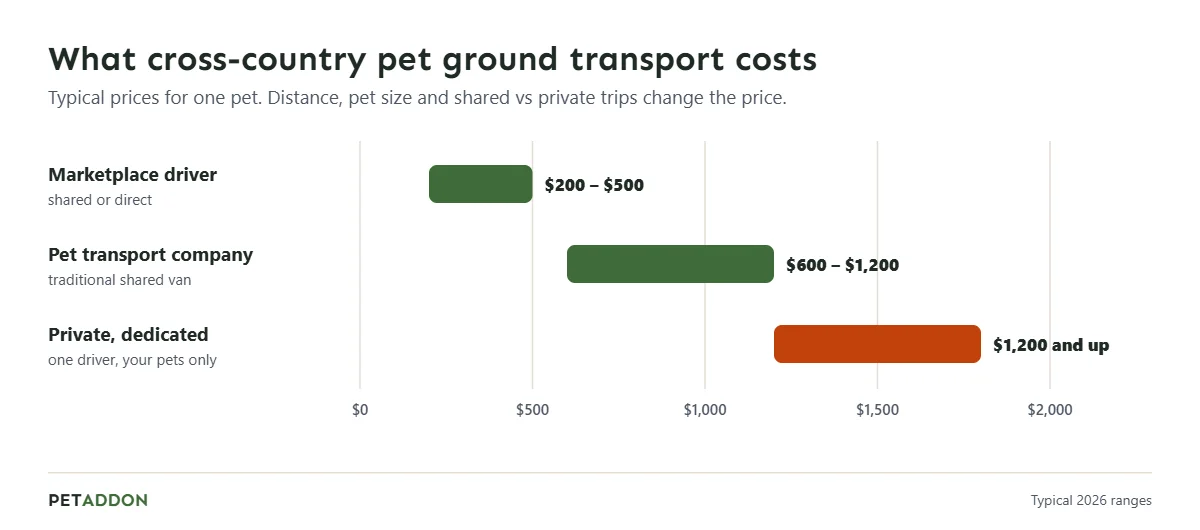
Ground pet transport moves your dog or cat by road, in a van or car with a driver, door to door. It is the main option for pets too big for an airline cabin, snub-nosed breeds that airlines refuse in the hold, and moves in summer when heat embargoes stop cargo. A cross-country trip costs about $200 to $500 through a marketplace driver and $600 to $1,200 with a traditional pet transport company.
Contents
show
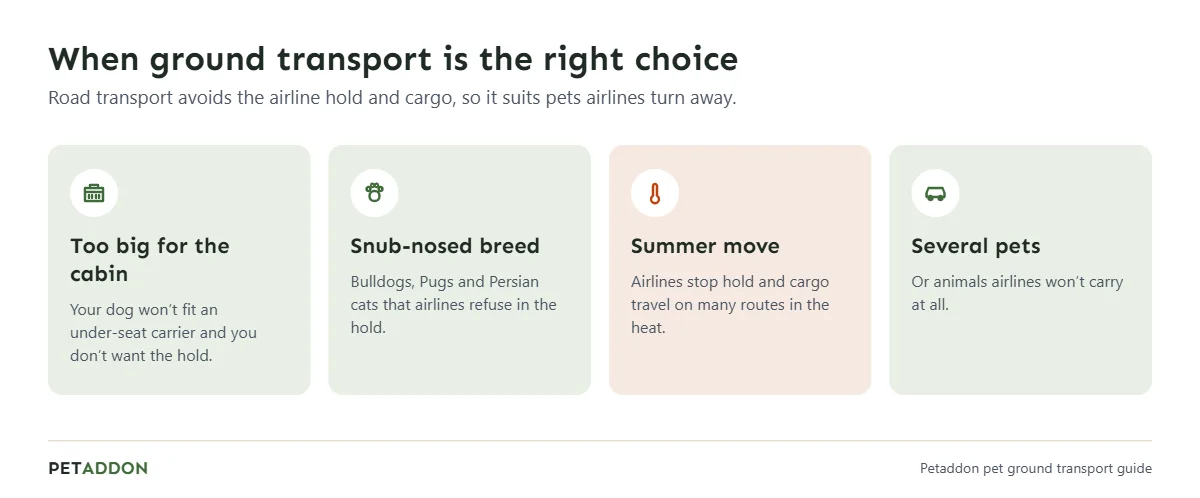
When ground transport is the right choice
- Your dog is too big for a cabin carrier, and you don’t want it in a hold or cargo.
- Your pet is a snub-nosed breed such as a Bulldog, Pug or Persian cat.
- You are moving in summer, when airlines stop hold and cargo travel on many routes.
- You have several pets, or animals airlines won’t carry.
- You are driving yourself but want your pet to travel separately.
Types of ground pet transport
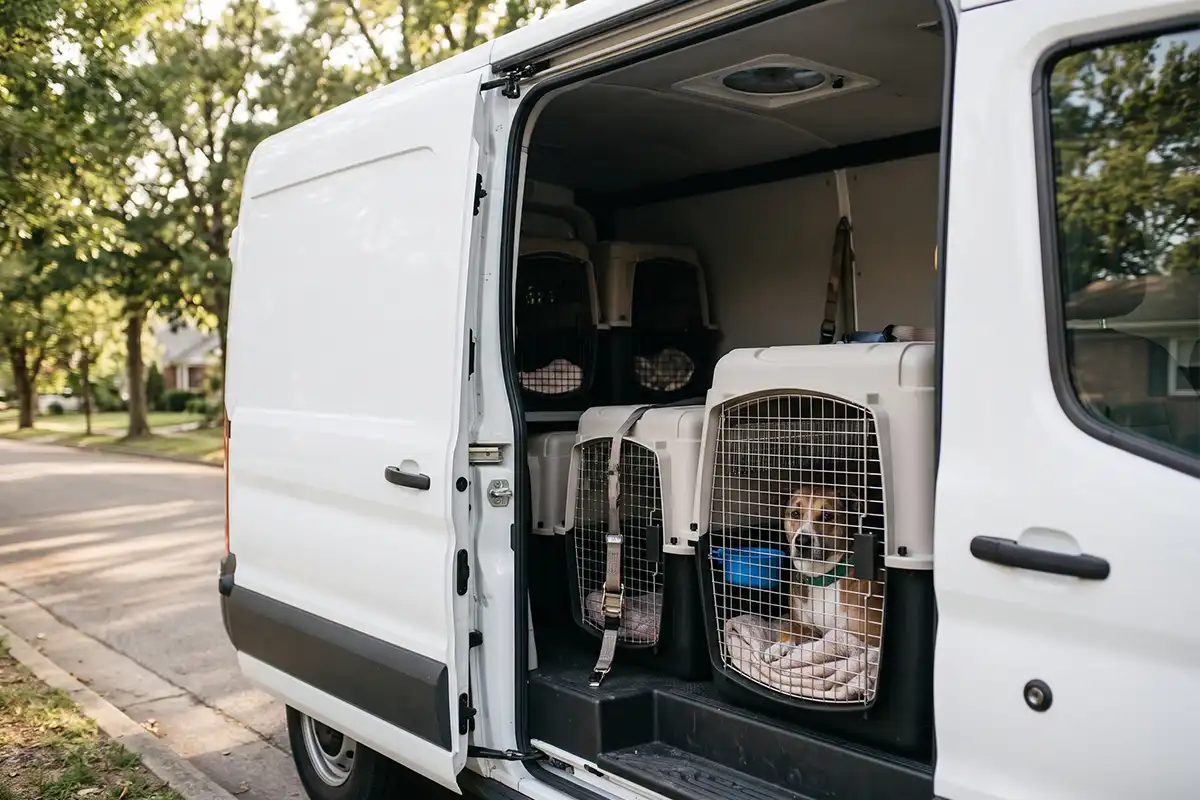
- Shared pet transport vans. A company drives a climate-controlled van on a route, collecting and dropping off several pets. Usually cheaper, but trips take longer.
- Dedicated or private transport. One driver takes only your pets, direct. Faster and costs more.
- Pet nannies and independent drivers. Booked through marketplaces such as CitizenShipper, where drivers bid on your trip.
- Driving yourself. The cheapest and least stressful option for many pets, if you can make the trip.
How much does pet ground transport cost?
| Option | Typical cross-country cost |
|---|---|
| Marketplace driver (shared or direct) | $200 to $500 |
| Traditional pet transport company | $600 to $1,200 |
| Private, dedicated transport | $1,200 and up |
Price depends on distance, the number and size of pets, whether the trip is shared or private, and how fast you need it. Compare with flying in the pet flight cost calculator, which has a ground transport option.
How to choose a transporter
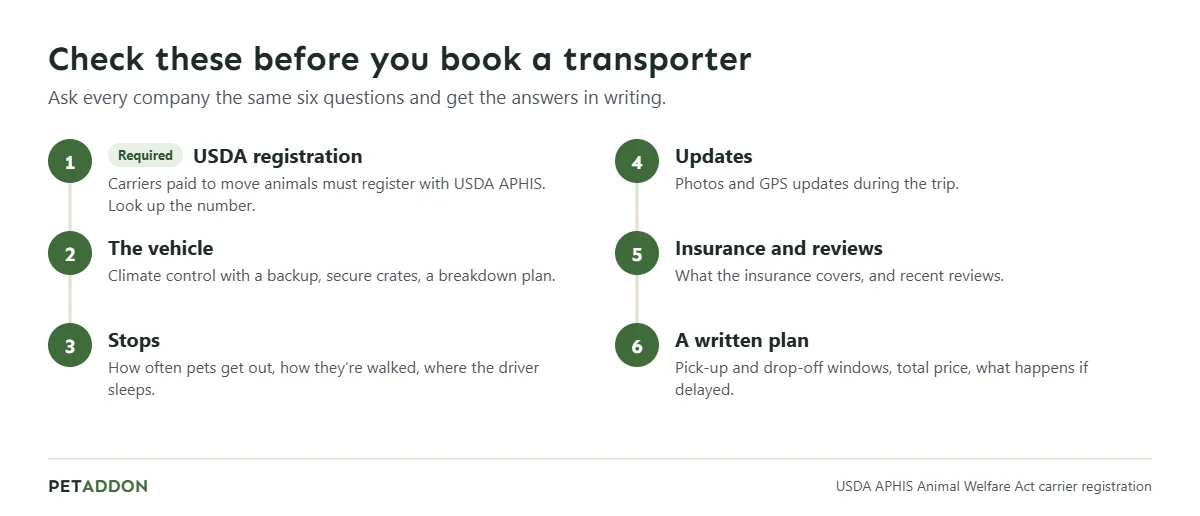
- Check USDA registration. Under the Animal Welfare Act, businesses that move animals for pay must register with USDA APHIS as carriers. Ask for the registration number and look it up in the APHIS public search tool.
- Ask about the vehicle. Climate control with a backup, secure crates, and a plan for breakdowns.
- Ask about stops. How often pets get out, how they are walked, and where the driver sleeps.
- Ask for updates. Good transporters send photos and GPS updates during the trip.
- Check insurance and reviews. Ask what the transporter’s insurance covers and read recent reviews.
- Get the plan in writing. Pick-up and drop-off windows, total price, and what happens if the trip is delayed.
Paperwork for ground transport
Most states require a health certificate (a certificate of veterinary inspection) for dogs entering from another state, and most transporters ask for one, issued within 10 days of pick-up, plus a current rabies certificate. Pack a copy of both with your pet, along with food, medications and a familiar blanket.
Preparing your pet
Get your pet used to its crate a few weeks before the trip. Feed a light meal before pick-up, and give the driver written instructions for feeding, medications and any behavior to watch for. Cats travel best in a crate with a small litter tray and a hiding spot.
Ground pet transport FAQ
How much does it cost to ship a dog across the country by ground?
About $200 to $500 through a marketplace driver, and $600 to $1,200 with a traditional pet transport company.
Is ground transport safer than flying for pets?
For snub-nosed breeds, large dogs and summer moves, ground transport avoids the heat and handling risks of the hold or cargo. For small pets, flying in the cabin with you is usually quicker and less stressful.
How long does cross-country pet transport take?
A dedicated trip takes 3 to 5 days coast to coast. Shared routes can take a week or more.
Do pet transporters need a license?
Businesses that move animals for pay must register with USDA APHIS under the Animal Welfare Act. Ask for the registration number.